
Description
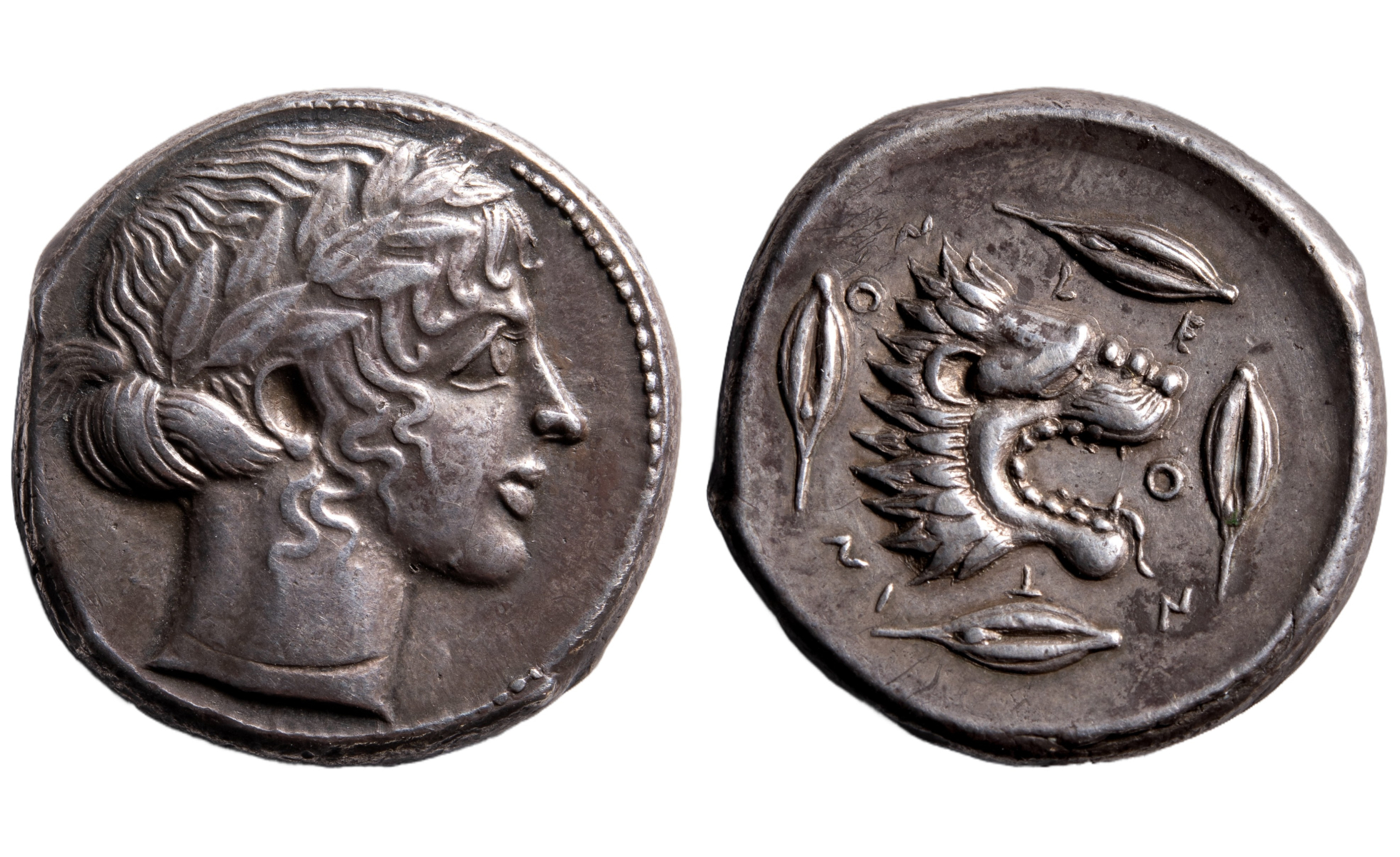
Sicily. Leontini. Tetradrachm ca. 450-440 BC. Silver 17.37 g., 25 mm.
The obverse presents a serene portrait of Apollo, the patron god of Leontini. He is shown with his long hair bound, wearing a laurel wreath and with four locks of hair falling loosely before his ear. The elegant and idealised modelling of Apollo’s features speaks to the refined sensibilities of the engraver and the high level of die-cutting in Sicilian mints at this time //
The reverse is a tour de force of expressive design: a lion’s head, jaws agape, roars outward in a powerful heraldic composition. It is surrounded by four barley grains, emblematic of Leontini’s fertile agricultural plain, from which the city drew its wealth. The reverse legend reads: ΛΕΟΝΤΙΝΟΝ, ‘Of the Leontines’.
A beautifully toned, medallic Greek coin of the finest classical style with an exceptional provenance. This piece exemplifies the artistic heights reached in Sicilian numismatics during the golden age of Greek coinage.
Provenance Details
Ex P. Tinchant (1893–1981), known as “Richard J. Graham”.
Ex J. Schulman 243, 8 June 1966, lot 1086. Subsequently Ivor Fox-Strangways Guest, 3rd Viscount Wimborne (1939–1993).
Ex Sotheby’s, London, 4 April 1991, lot 14.
Ex Tradart, 12 December 1991, lot 44.
Comment
In the 5th century BC, Sicily was a crucible of Greek innovation. Its cities were wealthy, independent, and fiercely proud of their heritage, producing some of the most striking coinage of the entire ancient world. Among them, Leontini stands out. Founded by Chalcidian Greeks in the 8th century BC, Leontini (modern Lentini) took its name from the lion (λέων) and adopted this emblem as its defining symbol. While smaller than neighbouring Syracuse or Akragas, Leontini asserted its identity with a series of exquisite silver issues such as this one.
The pairing of Apollo and the lion on this coin was both deliberate and poetic. Apollo, god of music, reason, and harmony, embodied civic virtue and divine favour. The lion, by contrast, represented untamed military strength, reminding viewers of the city’s power in the face of rivals.
ArtAncient Ltd
SW6 2FR London - United Kingdom
+44 20 3621 0816